
Recovery is “a spiritual journey by which people with psychiatric disabilities rebuild and further develop their connectedness to themselves, to others, to their living, learning, and working environments, and to larger meaning and purpose (Spaniol (2002, p. 332).”
Resources
Spirituality and Mental Health Research (Koenig, 2011) here
Handbook of Religion and Health (2012) here,
“Religious/spiritual beliefs, values and practices of the individual, their families and of their communities, have the potential to influence the course of mental illness and attitudes towards people living with mental illness.”
”The RANZCP recommends that psychiatrists: ensure the provision of holistic assessment and care taking account of a person’s ‘body, mind and soul’, encompassing their physical, psychological, sociocultural and religious/spiritual needs and values.”
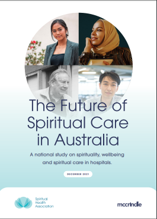
Australian Spiritual Care Reports
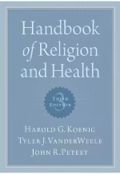
Handbook of Religion and Health (2023) here
Medicine, Religion and Health (Koenig, 2008) here
Psychiatry College Statements on Spirituality, Religion and Psychiatry
Handbook of Religion and Health (2002) here
The relevance of religion and spirituality to psychiatric practice (2018) here
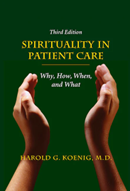
Spirituality in Patient Care (Koenig, 2013) here